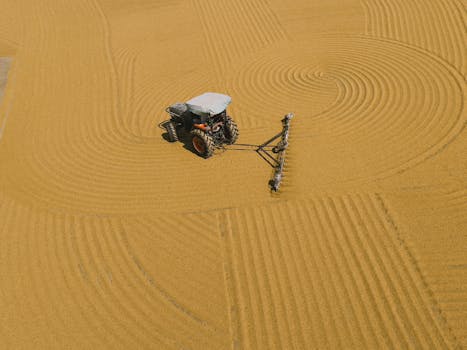

In an era where resource scarcity and climate volatility are no longer abstract threats but tangible realities for agricultural producers, the promise of “doing more with less” has never been more compelling. But what does that really mean on the ground? Beyond the buzzwords, what are the core mechanisms driving the revolution in precision agriculture technologies, and how are they fundamentally altering the agricultural landscape? This deep dive aims to cut through the marketing gloss and explore the analytical underpinnings of these transformative tools.
The Data Deluge: From Raw Information to Actionable Intelligence
The bedrock of any precision agriculture initiative is its ability to collect, process, and interpret vast amounts of data. This isn’t just about throwing sensors at a problem; it’s about understanding the complex interplay of environmental factors, crop physiology, and management interventions.
Geospatial Foundations: At its heart, precision agriculture is spatial. Geographic Information Systems (GIS) and Global Navigation Satellite Systems (GNSS, commonly known as GPS) provide the indispensable framework for mapping variability across a field. Think of it as giving every square meter of your farm a unique address. This allows for the precise application of inputs, whether it’s water, fertilizer, or pesticides, only where and when they are needed.
Sensor Networks: The Farm’s Nervous System: From soil moisture probes and weather stations to advanced optical and multispectral sensors mounted on drones or tractors, these devices act as the farm’s distributed nervous system. They gather real-time data on parameters like soil nutrient levels, canopy health, temperature, and humidity. This continuous stream of information is crucial for detecting subtle changes that might otherwise go unnoticed.
The Power of Predictive Analytics: The true magic happens when raw data is synthesized. Machine learning algorithms and statistical models can analyze historical and real-time sensor data to predict crop performance, identify potential disease outbreaks before they manifest visually, and forecast optimal harvest windows. This predictive capacity transforms farming from a reactive practice into a proactive strategy.
Variable Rate Application: Tailoring Inputs to Micro-Needs
One of the most tangible outcomes of precision agriculture technologies is the ability to move beyond uniform application of inputs. This concept, known as Variable Rate Application (VRA), is a game-changer for both profitability and sustainability.
Nutrient Management Optimization: Soil maps, generated through grid sampling or sensor-based analysis, reveal pockets of deficiency or surplus. VRA technology, integrated with GPS-guided spreaders and sprayers, can then adjust the rate of fertilizer application on the fly, ensuring crops receive precisely what they need, thus minimizing waste and reducing the risk of nutrient runoff into waterways.
Water Conservation Through Targeted Irrigation: Soil moisture sensors are key here. Instead of irrigating an entire field based on a general assumption, VRA systems can deliver water only to areas experiencing drought stress. This not only conserves a precious resource but also prevents waterlogging in other zones, which can be detrimental to root health and yield.
Pest and Disease Control Refined: Instead of broad-spectrum spraying, sensors can detect early signs of pest infestation or disease. This allows for highly targeted application of crop protection agents, reducing the overall volume of chemicals used, lowering costs, and minimizing environmental impact. It’s a far cry from the blanket applications of yesteryear.
Drones and Robotics: The Eyes and Hands of Modern Agriculture
The integration of unmanned aerial vehicles (UAVs) and autonomous agricultural machinery represents a significant leap forward in the practical application of precision agriculture technologies.
Aerial Surveillance and Analysis: Drones equipped with various sensors offer unprecedented aerial perspectives. They can map fields, monitor crop growth, identify irrigation leaks, and even detect stressed plants due to pests or nutrient deficiencies. The data captured allows for rapid assessment of large areas, saving time and labor compared to traditional ground surveys.
Robotic Precision in Action: From autonomous tractors that can perform field operations with sub-centimeter accuracy to robotic weeders that precisely target and remove unwanted vegetation, robotics is automating tasks with a level of precision previously unimaginable. This not only enhances efficiency but also addresses labor shortages that plague the agricultural sector.
The Synergy of IoT: The Internet of Things (IoT) plays a critical role in connecting these disparate technologies. Sensors communicate with each other, with central processing units, and with automated machinery, creating a highly integrated and responsive farming system. For instance, a drone might identify a stressed area, and this information is instantly relayed to an autonomous sprayer to apply a targeted treatment.
Beyond Yield: The Multifaceted Benefits of Precision Farming
While increased yield is often the headline benefit, a deeper analysis reveals a cascade of advantages stemming from the adoption of precision agriculture technologies.
Economic Efficiency: By optimizing input use, reducing waste, and improving crop quality, precision agriculture directly translates into higher profitability for farmers. Lower input costs coupled with potentially higher yields create a more robust economic model.
Environmental Stewardship: The targeted application of fertilizers and pesticides significantly reduces the environmental footprint of farming. Less runoff means cleaner water, and reduced chemical usage benefits biodiversity and soil health. Water conservation is also paramount in an era of increasing droughts.
Enhanced Decision-Making: The wealth of data generated empowers farmers with deeper insights into their operations. This data-driven approach fosters more informed and strategic decision-making, moving away from intuition-based practices towards scientifically validated methods.
* Improved Crop Quality and Consistency: When crops are managed with such fine-tuned precision, their health and development are more consistent, often leading to higher quality produce and a more predictable market supply.
Navigating the Future: Adoption Challenges and Opportunities
Despite the clear advantages, widespread adoption of precision agriculture technologies isn’t without its hurdles. The initial investment in hardware and software can be substantial, and the technical expertise required to manage these complex systems is a significant barrier for some. Furthermore, data security and ownership remain critical considerations.
However, the trajectory is clear. As the technologies mature, become more affordable, and user-friendly, their adoption will continue to accelerate. Innovations in AI, satellite imagery analysis, and affordable sensor technology are constantly pushing the boundaries of what’s possible. The future of farming is undeniably data-driven, and understanding the analytical power of precision agriculture technologies is key to navigating this exciting and essential transformation.
Wrapping Up: A Call for Analytical Integration
The true power of precision agriculture technologies lies not in the individual gadgets, but in their analytical integration. Farmers who successfully leverage these tools don’t just collect data; they transform it into strategic insights that optimize every aspect of their operation. My advice to any producer considering this path is to start with a clear objective – whether it’s water conservation, nutrient efficiency, or pest management – and then explore the specific technologies that offer the most direct and analytical solution to that problem. It’s about building a smarter, more responsive farm, one data point at a time.